PROJECT Residences A & D
TYPE Residential
CATEGORY Restoration
LOCATION Neo Iraklio, Athens, Greece
ARCHITECTURAL STUDY 2021-2024
YEAR OF COMPLETION 2025
AREA 500 m2
ARCHITECTURAL, INTERIOR & TECHNICAL DESIGN Monogon
LEAD ARCHITECTS Ioli Zavitsanou, Vagelis Zouglos
DESIGN TEAM Dimitra Poulokefalou, Christina Mammi
LIGHTING DESIGN Alkestie Skarlatou
STRUCTURAL ENGINEERING Christos Gologiannis Design & Application Engineers
STRUCTURAL ENGINEERING CONSULTANTS Filippos Zouglos, Dimitris Zavitsanos
CONTRACTOR Chrysanthos Boukouras
MAIN SUPPLIERS Soho Furniture, Giorgos Brebos Metal Structures, Double Glass, LightsOn, Haufen, Twelve Concept, Cretamar Marbles, PlaceD
PHOTOGRAPHY @Alina Lefa
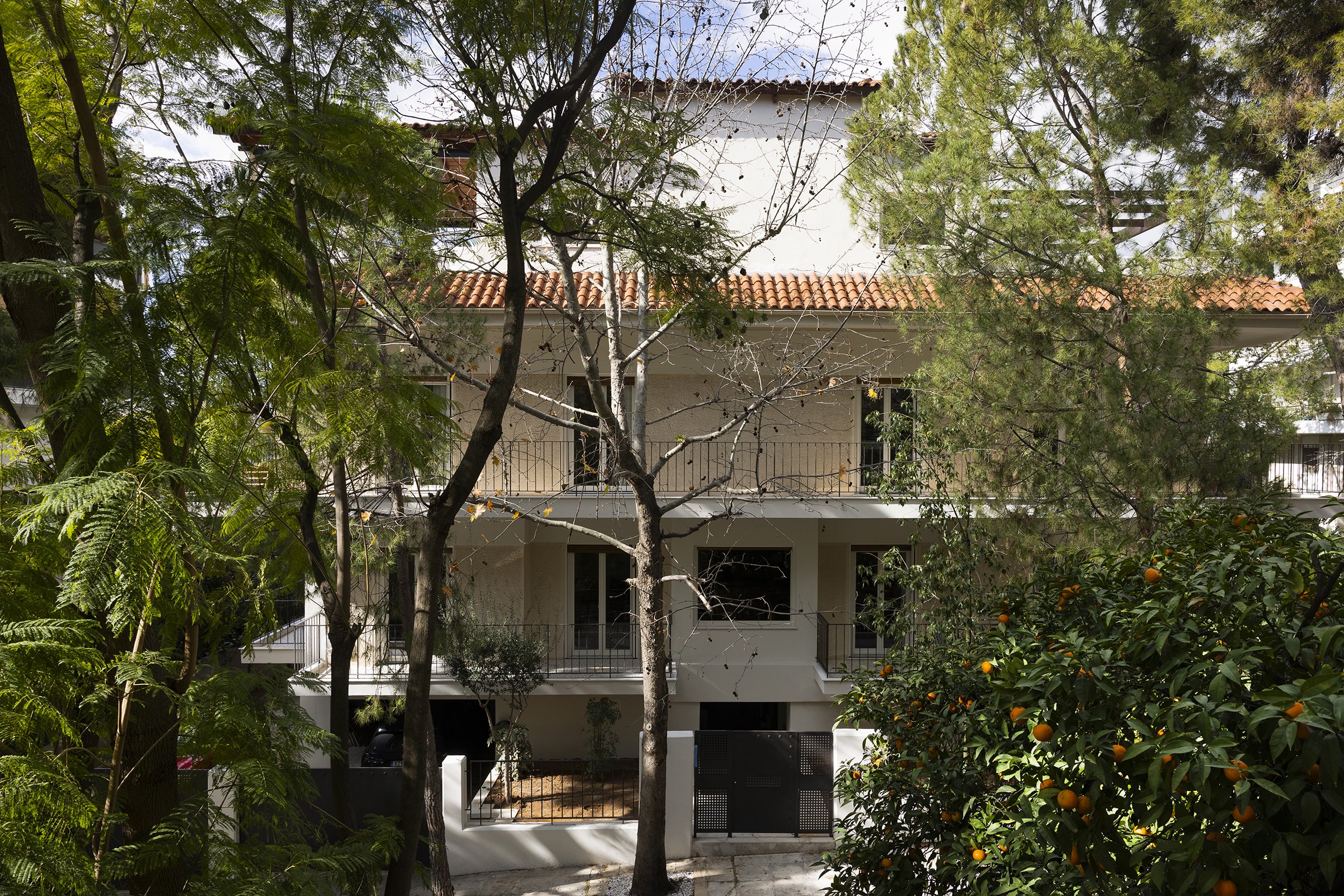
A detached house built in the early 1970s in the northern suburbs of Attica had, until recently, accommodated three unequal self-contained residences. Following the demanding restoration and reconstruction of the building damaged by the 1999 earthquake, the project focused on a new spatial organization and layout: the redesign and conversion of the property into two contemporary, autonomous housing units, alongside a comprehensive upgrade of the entire building while preserving the elements that were essential to maintaining its identity and the memories it carried.
The building’s structural system was strengthened with new materials, and a new ground-floor plan was created: the unification of the two former smaller units and the incorporation of the former entrance area resulted in a larger single residence of 185 m2, with a basement. The new organization aimed for the clearest possible circulation flows and a higher degree of privacy. The main entrances to the two units were separated, the external staircases were dismantled to free up additional open space within the plot and a new contemporary 315 m2 maisonette with a basement and an attic, was formed across the second and third levels.
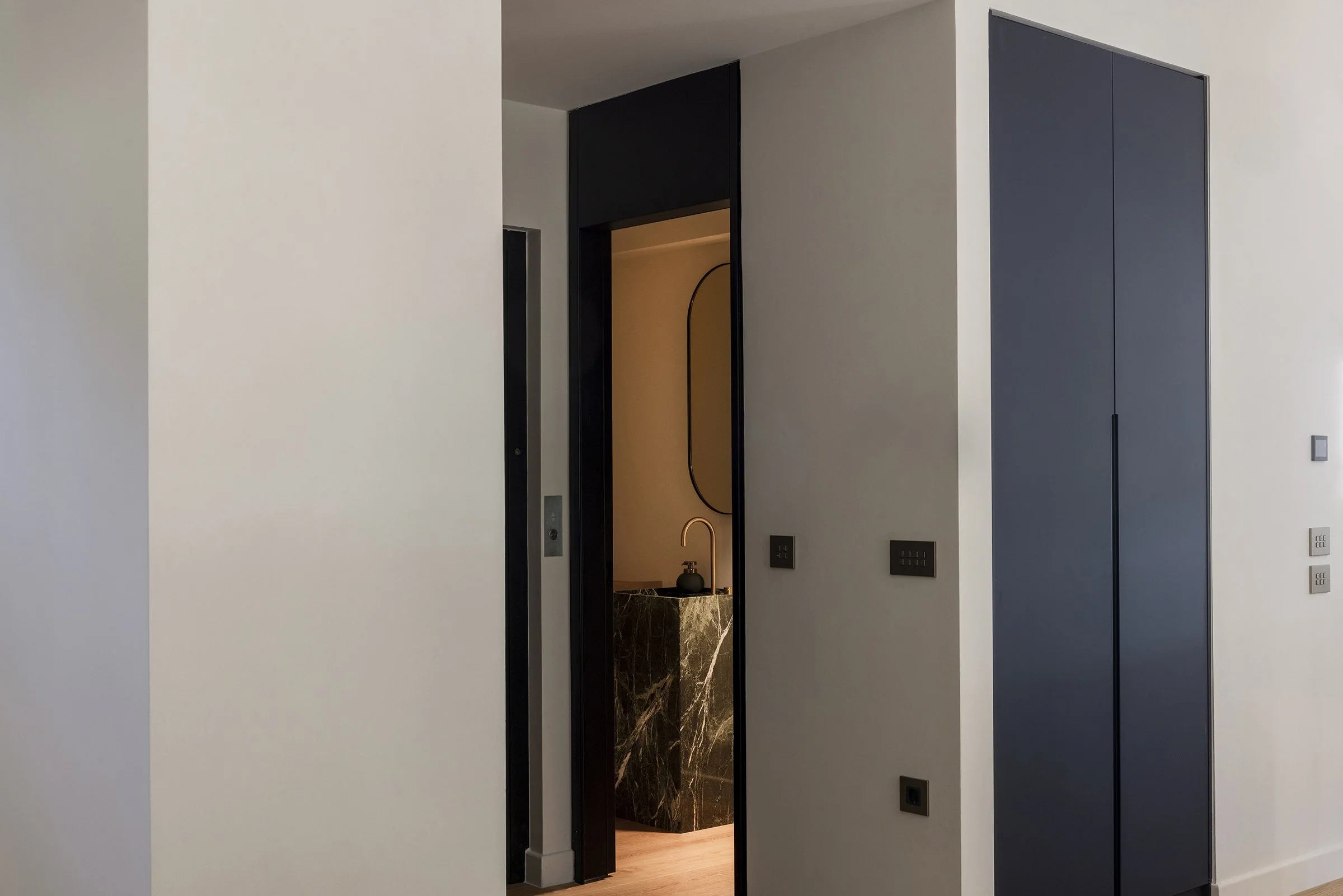
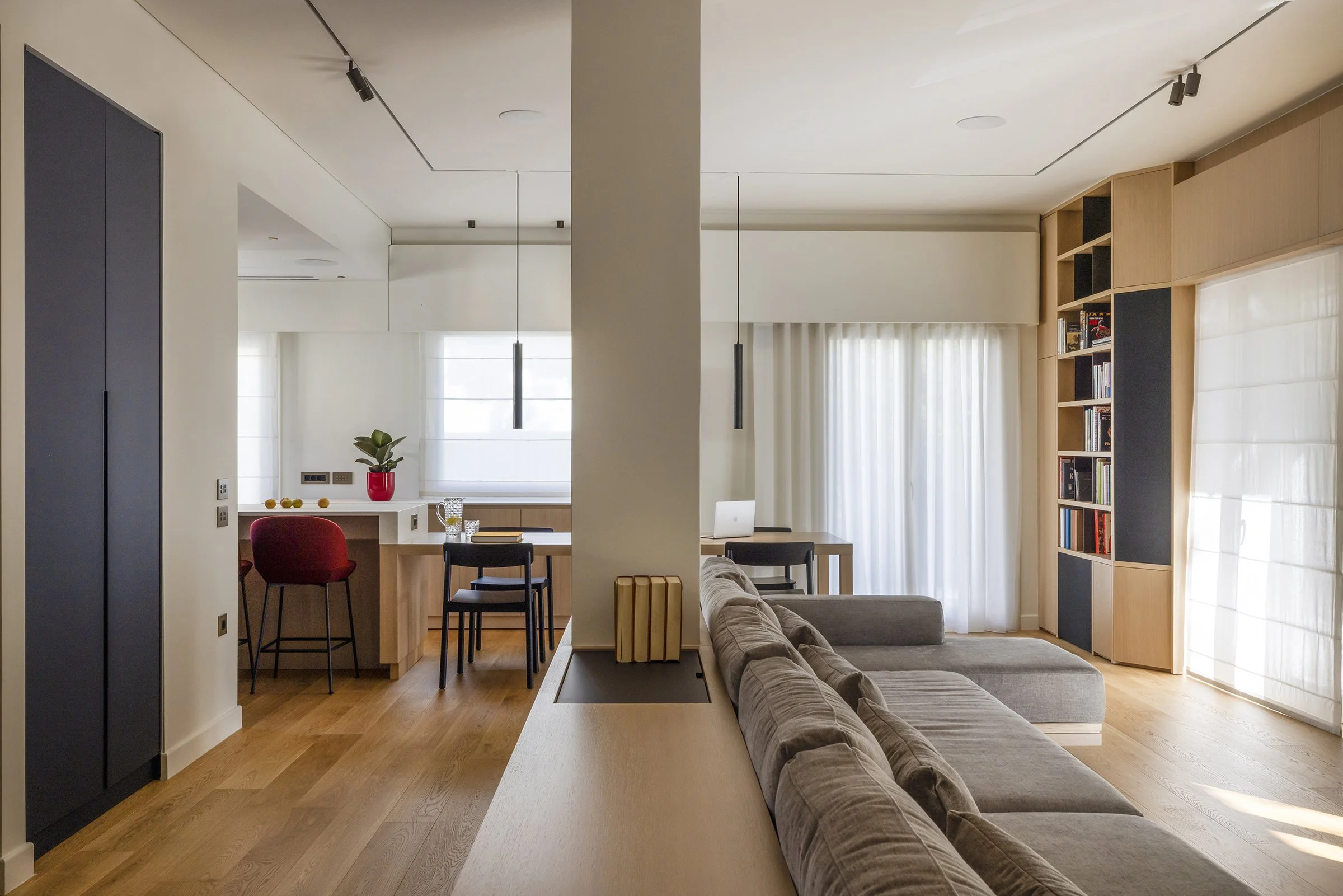
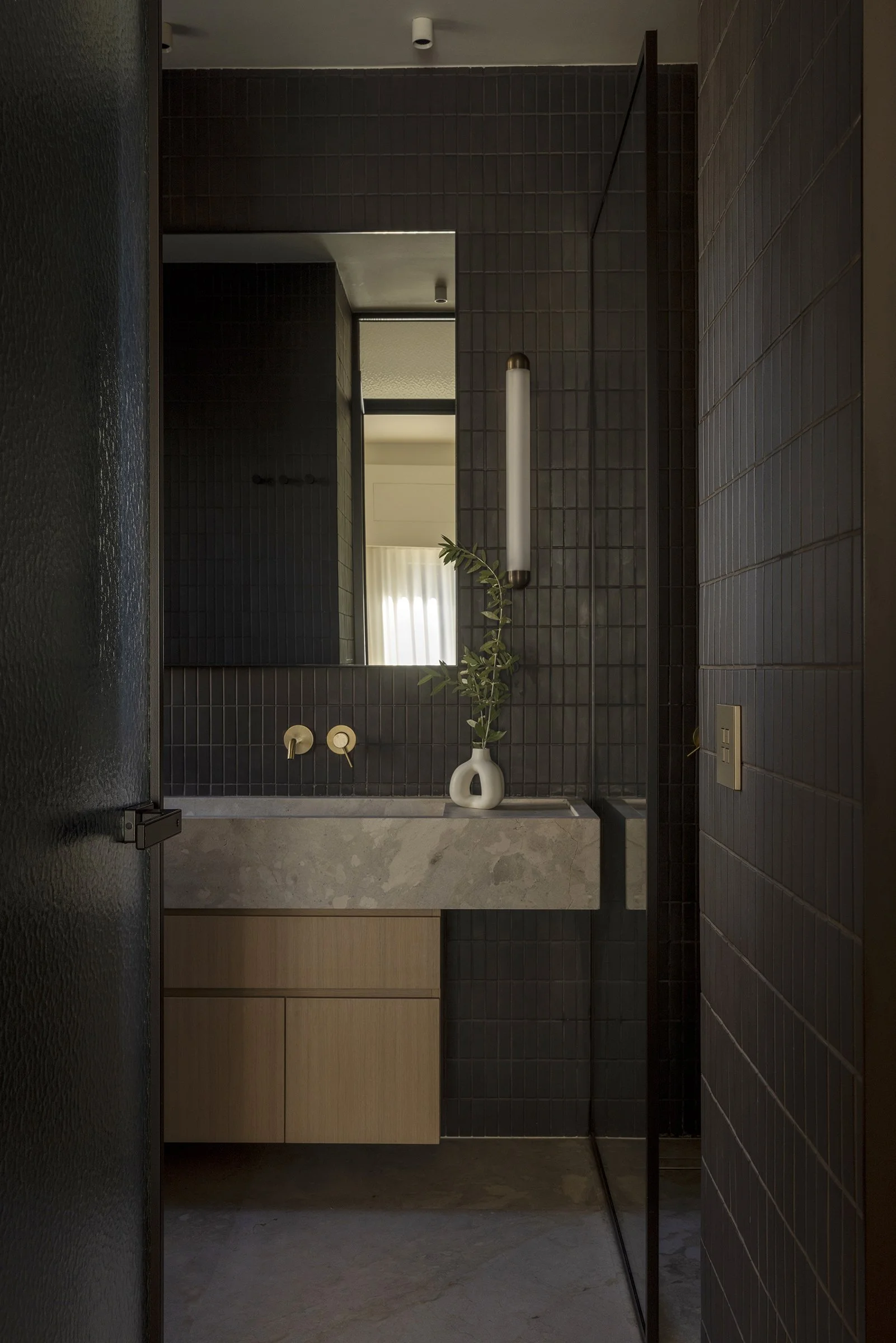
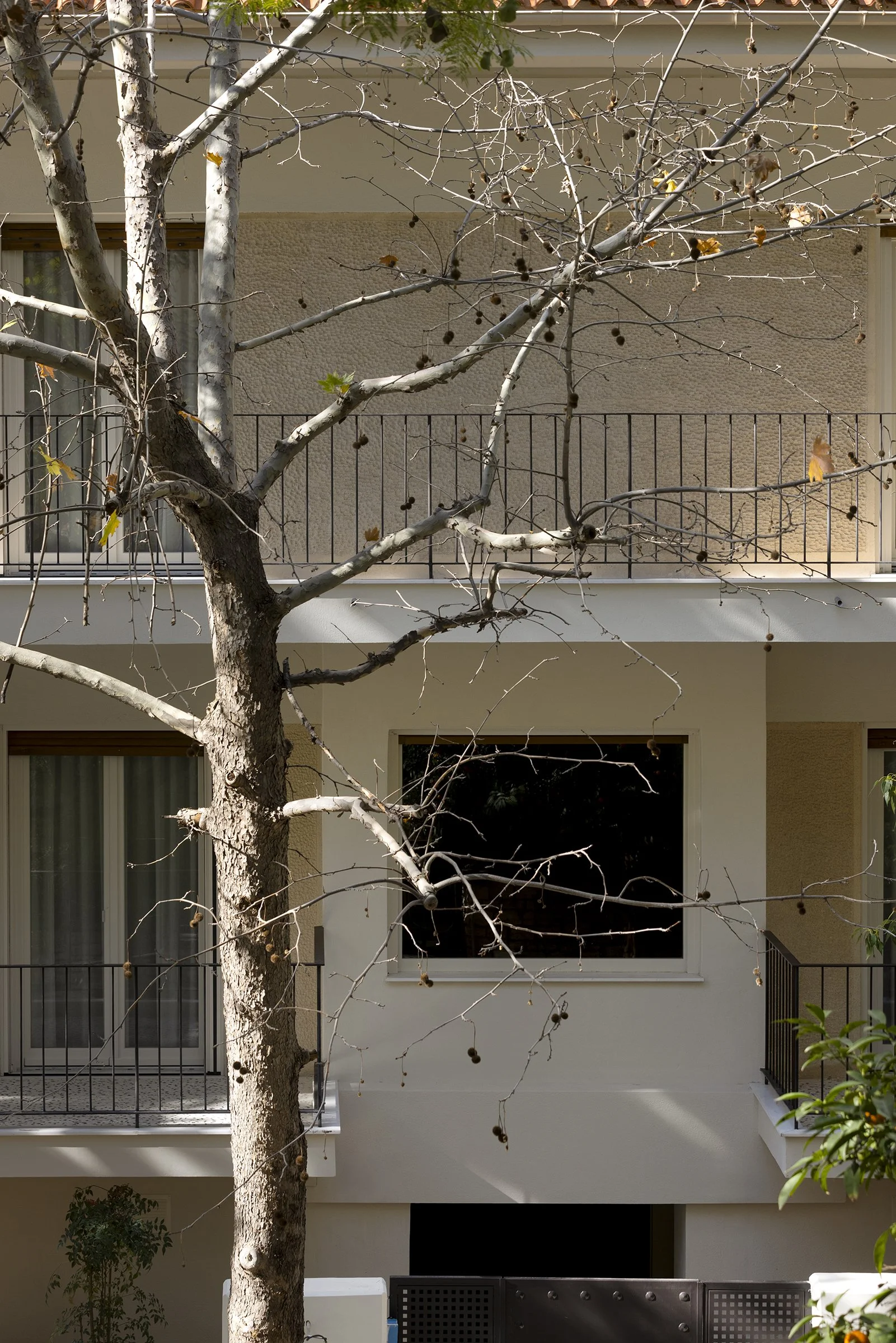
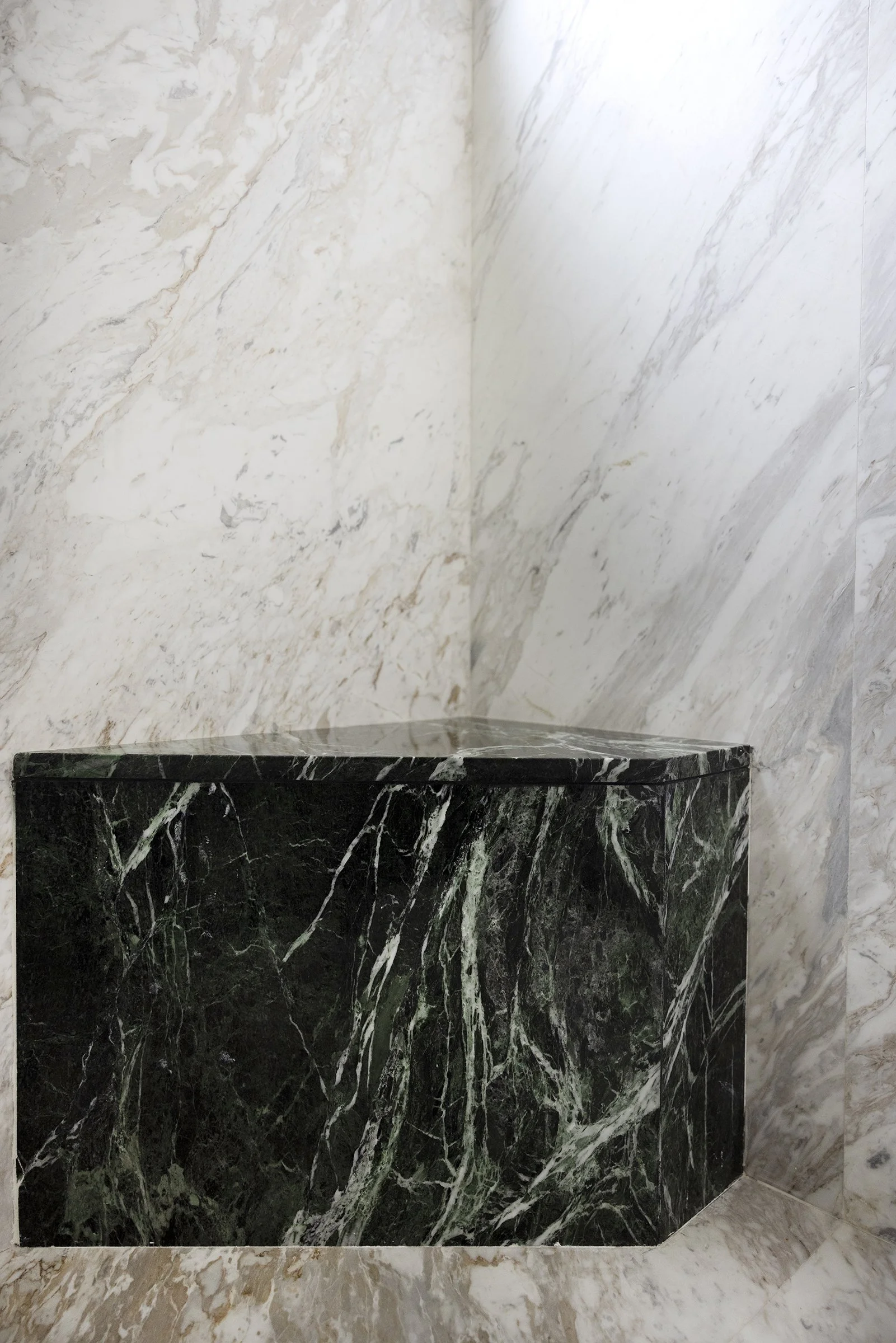
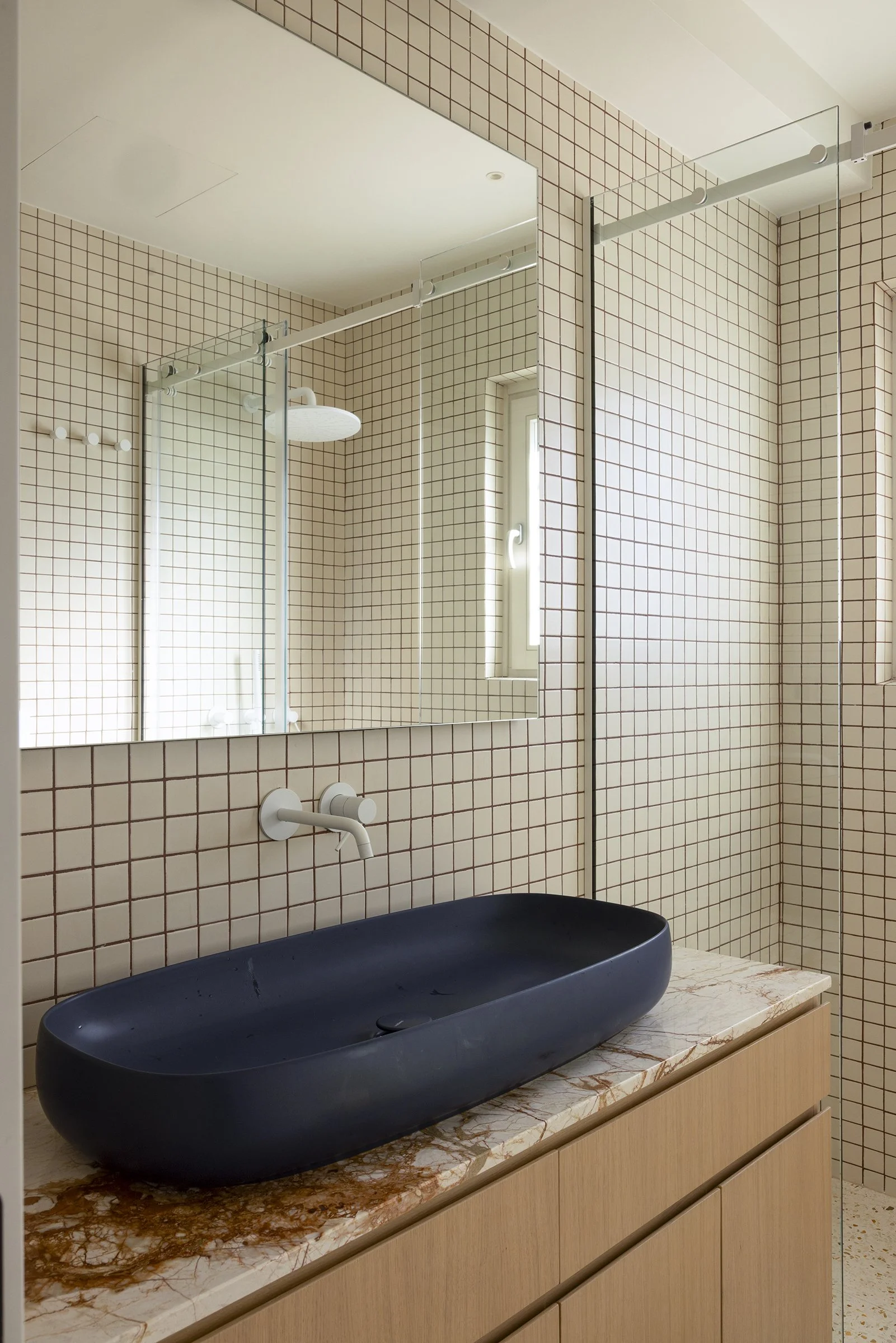
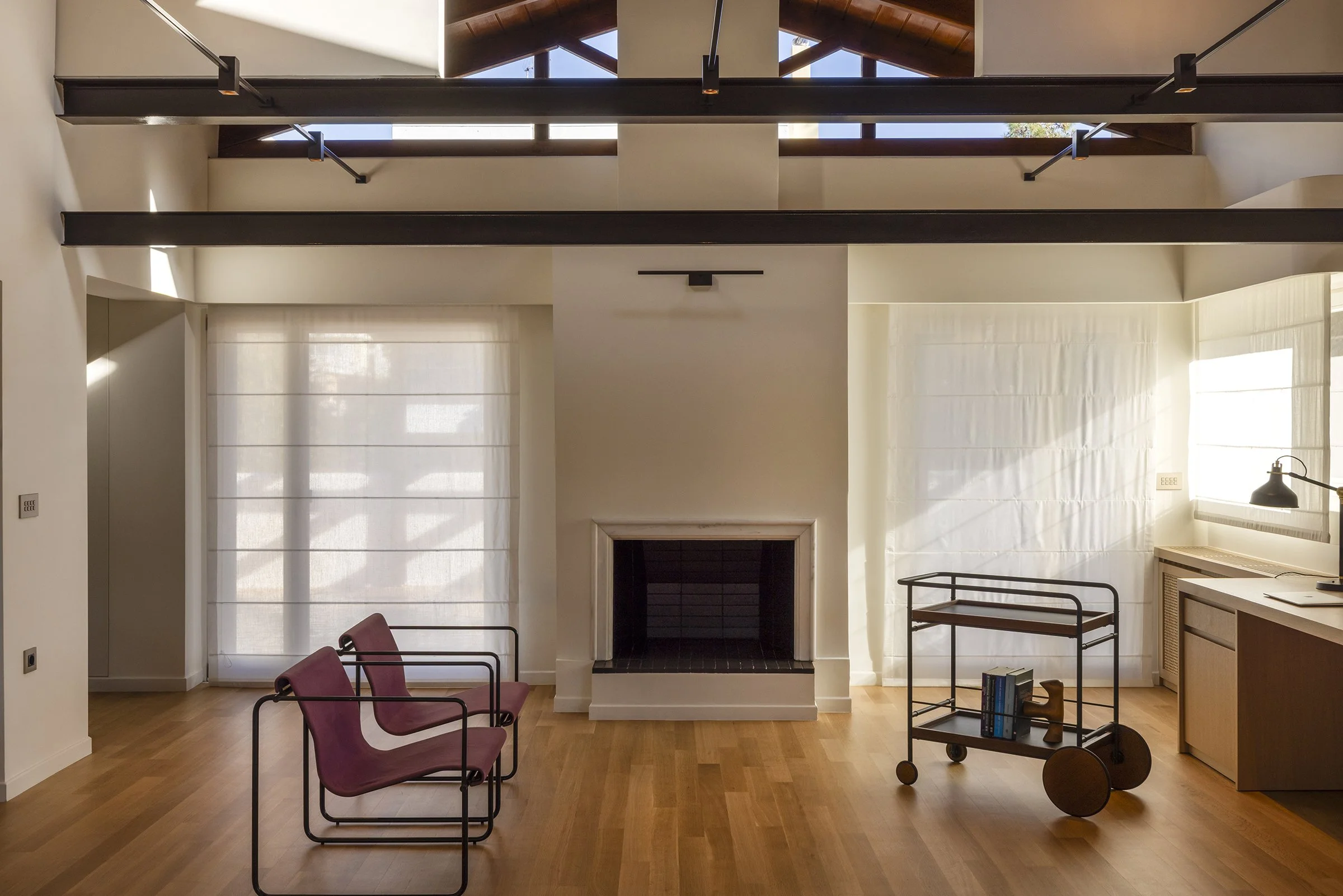
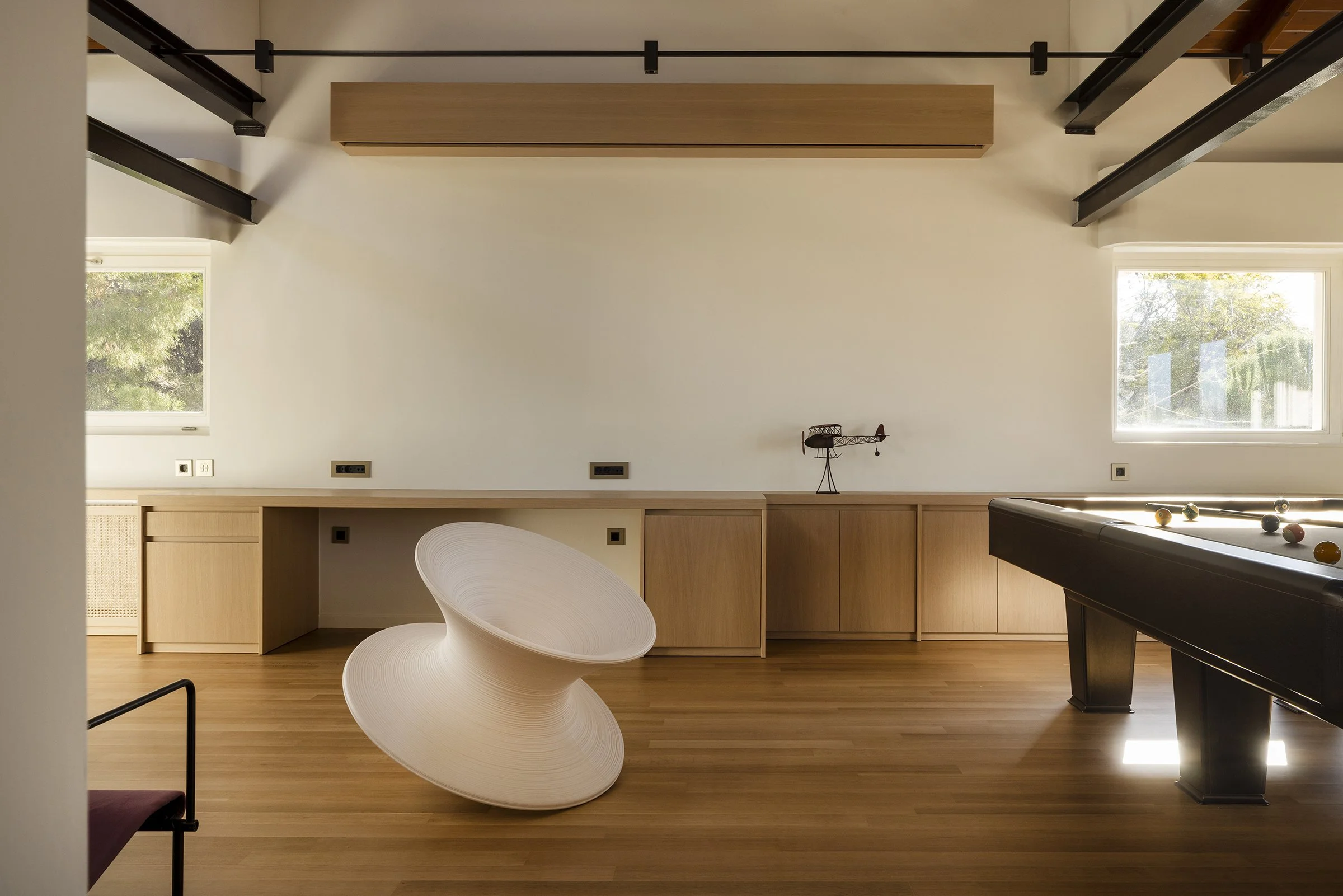
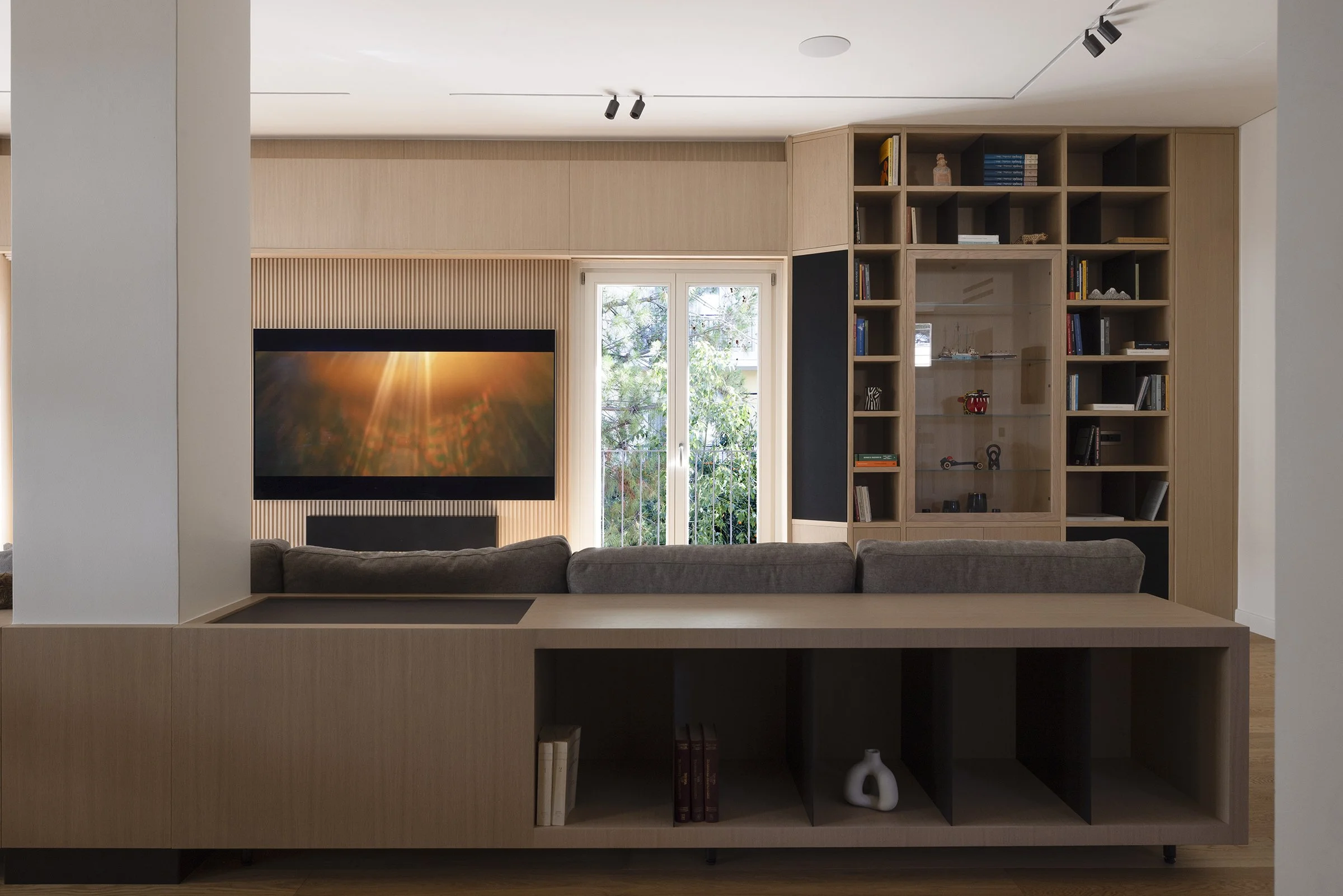
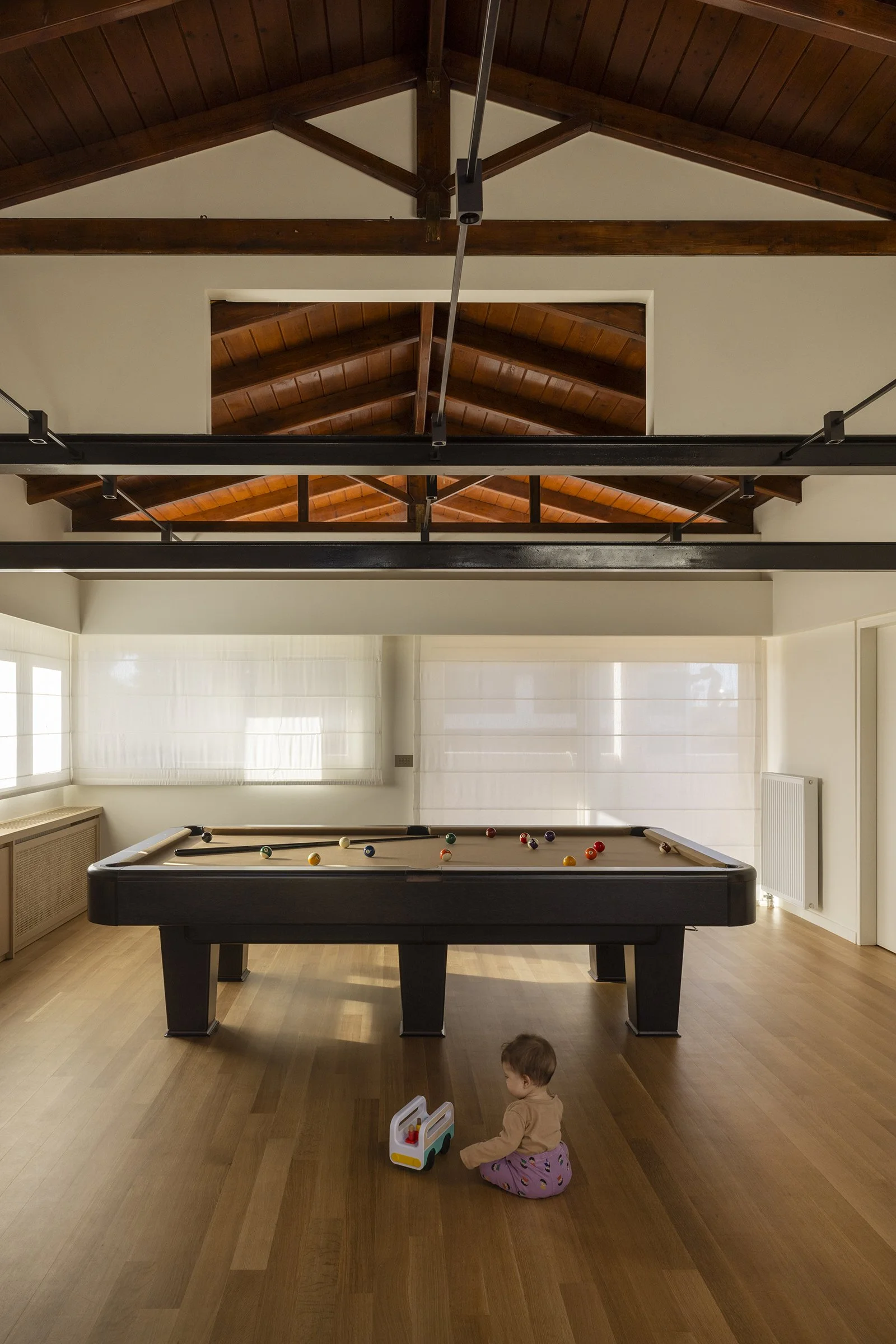
Guided but also inspired by the goal of preserving, maintaining, and foregrounding as many elements as possible in line with the owners’ wishes, such as the characteristic artificiel sculptural treatment of plaster on the exterior masonry, the building’s original balcony mosaics, the timber frames and shutters, and the old solid-wood handrails, the architectural design initially focused on resolving the new plan and the new main entrance, improving access to and from auxiliary spaces located in the basement, and enabling as much natural light as possible to penetrate the principal living areas of both new homes at the upper levels. What remained was treated not as residue, but as active architectural tools thus supporting a new proposal for living built on their renewed form. Retrofitting and energy upgrading, to the extent possible, were implemented through the installation of new contemporary heating and cooling systems and smart control systems. The primary interior materials are natural oak, bespoke metal and glass elements, Karnis, Tinos and Volakas marbles, and natural terracotta flooring on the terraces.